2019–2020
·
mudita sport
Go and Learn
GoAL Language Learning with Arsenal and Manchester City
A white-label English language learning app for children, in official partnership with Arsenal FC and Manchester City, designed to make education feel like playing football.
ROLE: Lead Product Designer
PLATFORM: iOS · Android
PARTNERSHIP: Arsenal FC · Manchester City FC
The Project
GoAL started with a successful idea: an educator with a proven in-person methodology for teaching English to children through football. His workbooks worked. His classroom sessions worked. Now he wanted an app.
After the success of XLS Nudge, the same agency brought me in as lead designer. The project was ambitious: an iOS and Android app built in official partnership with Arsenal FC and Manchester City, designed as a white-label platform that could be skinned for any football club.
The football partnership gave the app an immediate hook for young users: their team, their players, their colours. The design challenge was everything that came after that, translating a methodology that worked beautifully in person into something that worked just as well on a phone, in the hands of a child who had other options for how to spend the next twenty minutes.

What I Owned
As the sole designer, I was responsible for:
End-to-end UX and UI design: onboarding, home, training games, player challenges, progress tracking, badges and rewards
White-label system design: a neutral base that could be skinned with any club's colours, badge, and player imagery
Brand adaptation: working with Arsenal and Manchester City's visual identity, adapted for a children's digital product
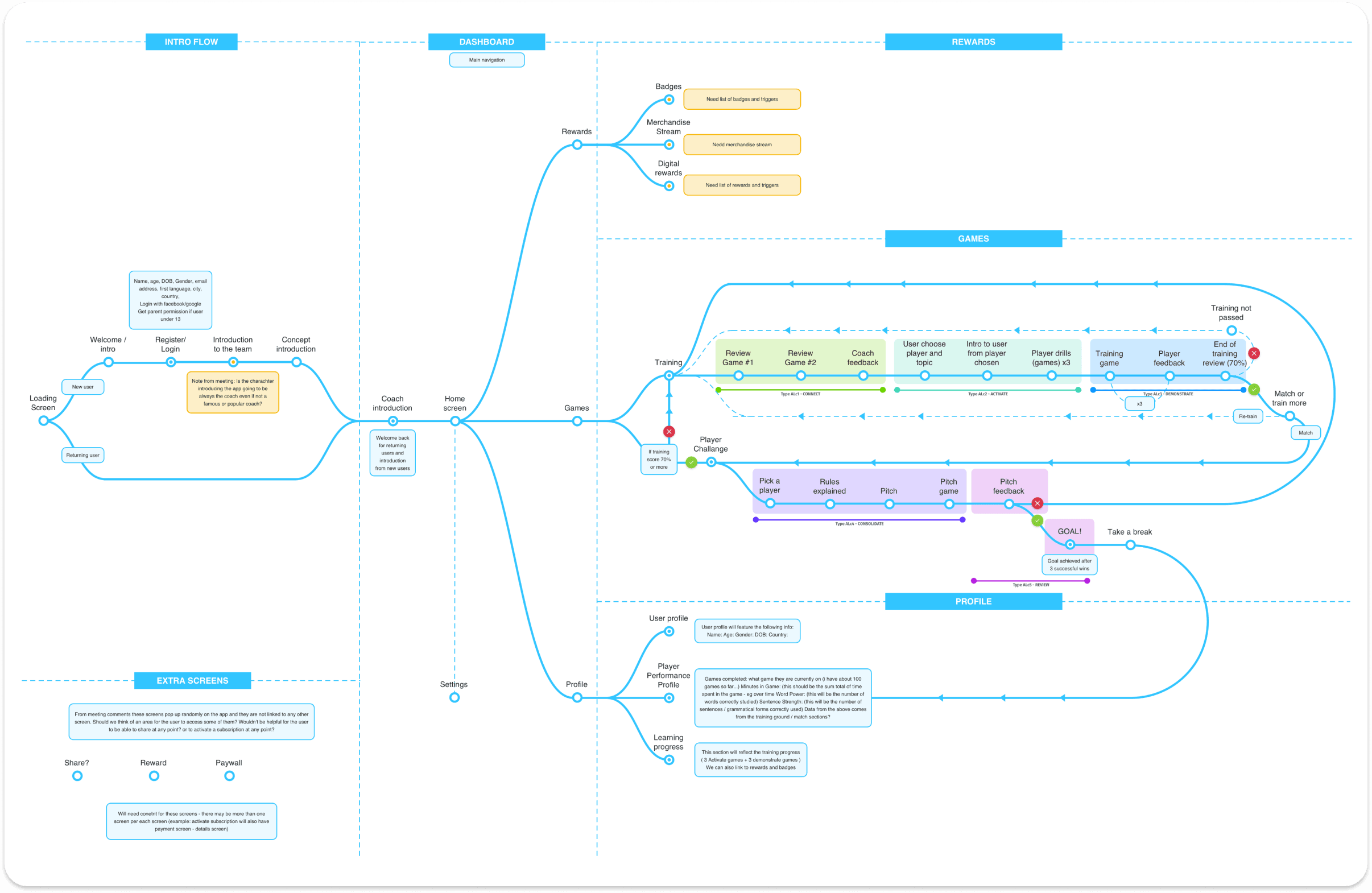
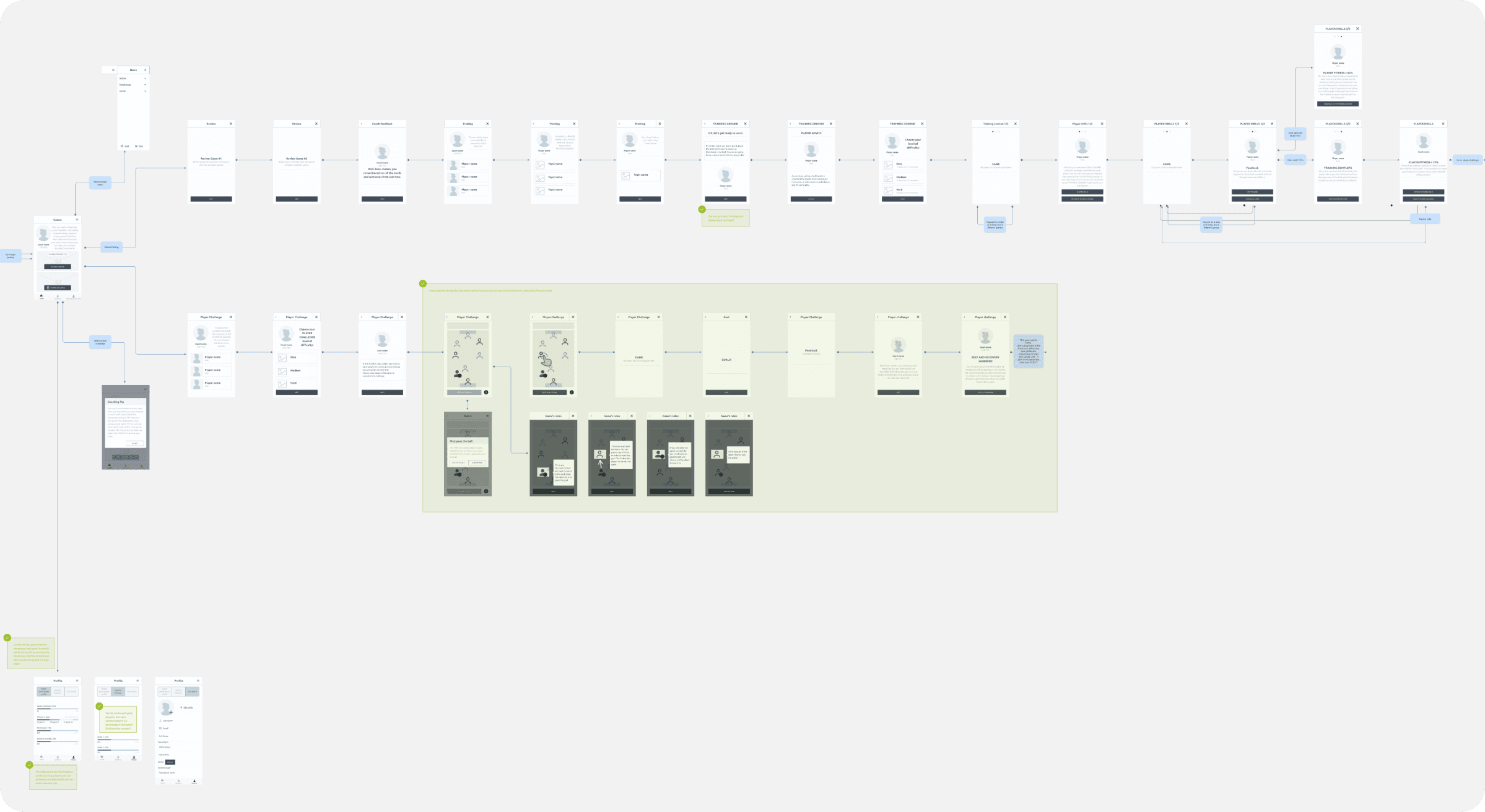
User flow and information architecture : structuring the learning progression across 13 game types and 9 timed challenges
UX research facilitation: user testing with children to validate and iterate on the game designs
Stakeholder management: working with a non-technical client and educating him through the design and development process
The Challenge
The client was an accomplished educator. His in-person methodology for teaching English through football was genuinely effective, he had the results, the books, and the classroom experience to prove it.
But designing for a ten-year-old with a phone is a different problem entirely.
The original exercises translated directly from his classroom approach: identify the player, name the player, answer correctly before moving on. In a classroom, with a teacher, with peers, with energy in the room, it worked. On a phone, alone, asked to identify a squad player they'd never heard of, unable to progress until they got it right, it didn't.
The feedback from early user testing with children was direct: the games were too hard to get past, too slow to reward, and not engaging enough to make them want to come back.
That feedback was difficult to bring to a client who had built his career on this methodology. But it was also the most important design insight on the project.
The solution was redesigning the game mechanics to be quicker, more forgiving, and rewarding much earlier, without losing the educational core that made the product worth building in the first place.
Onboarding
Fully Branded From the First Screen.
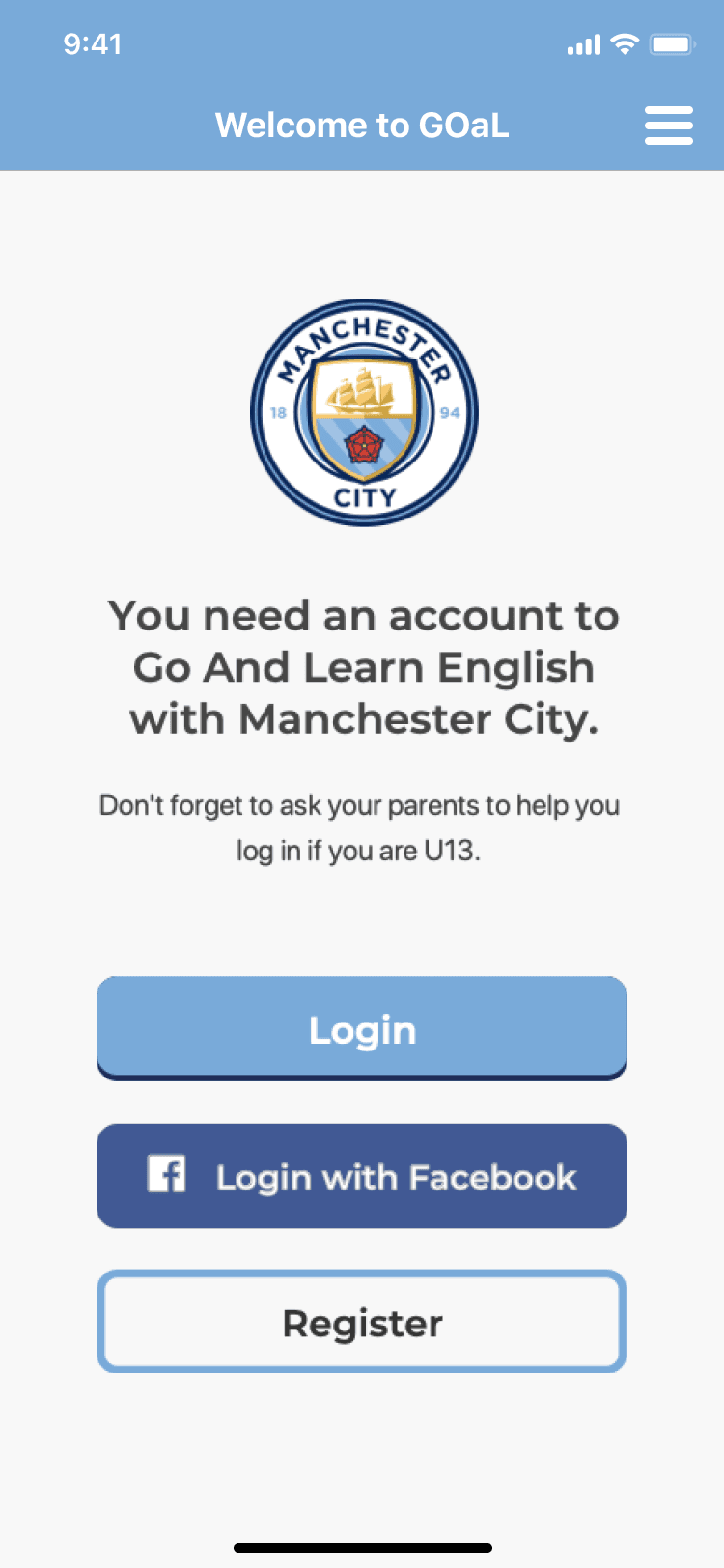
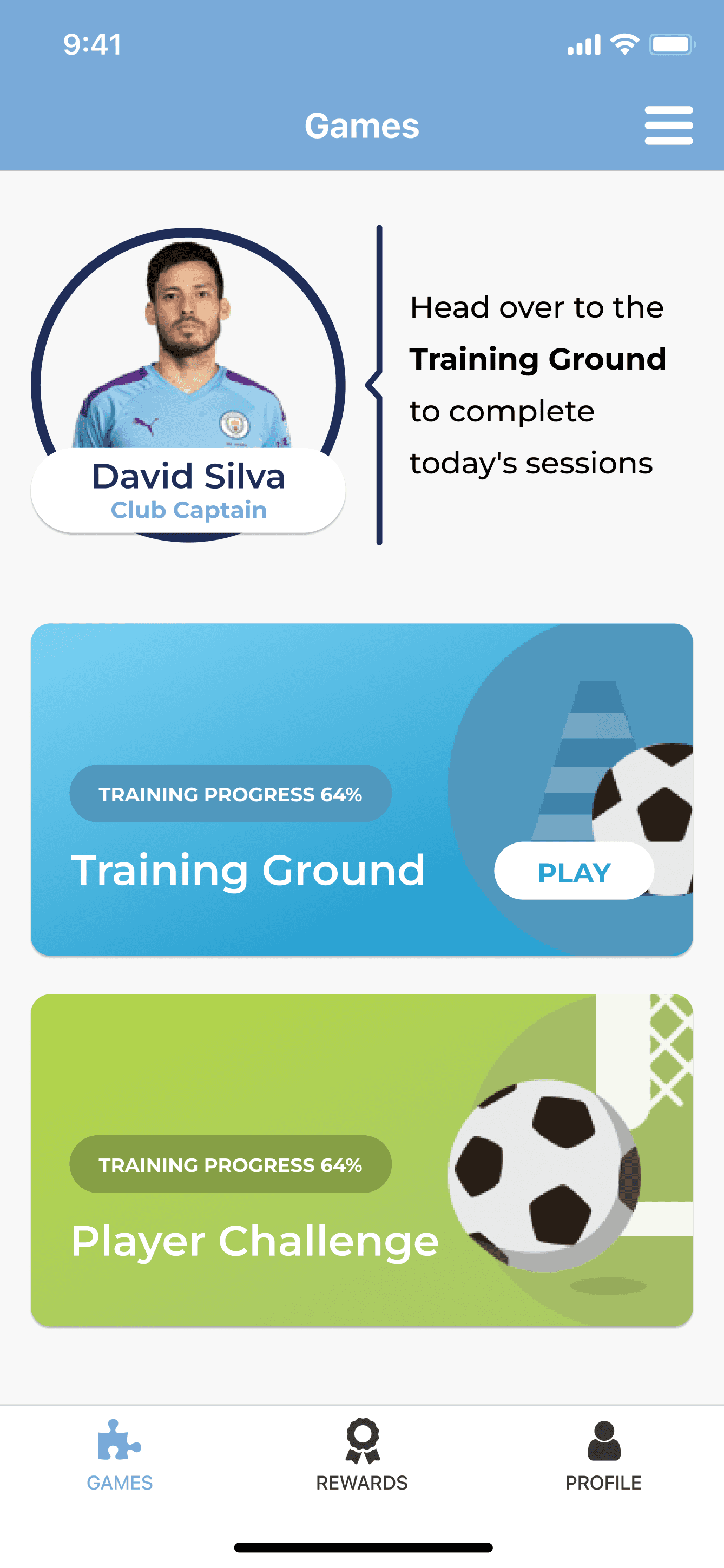
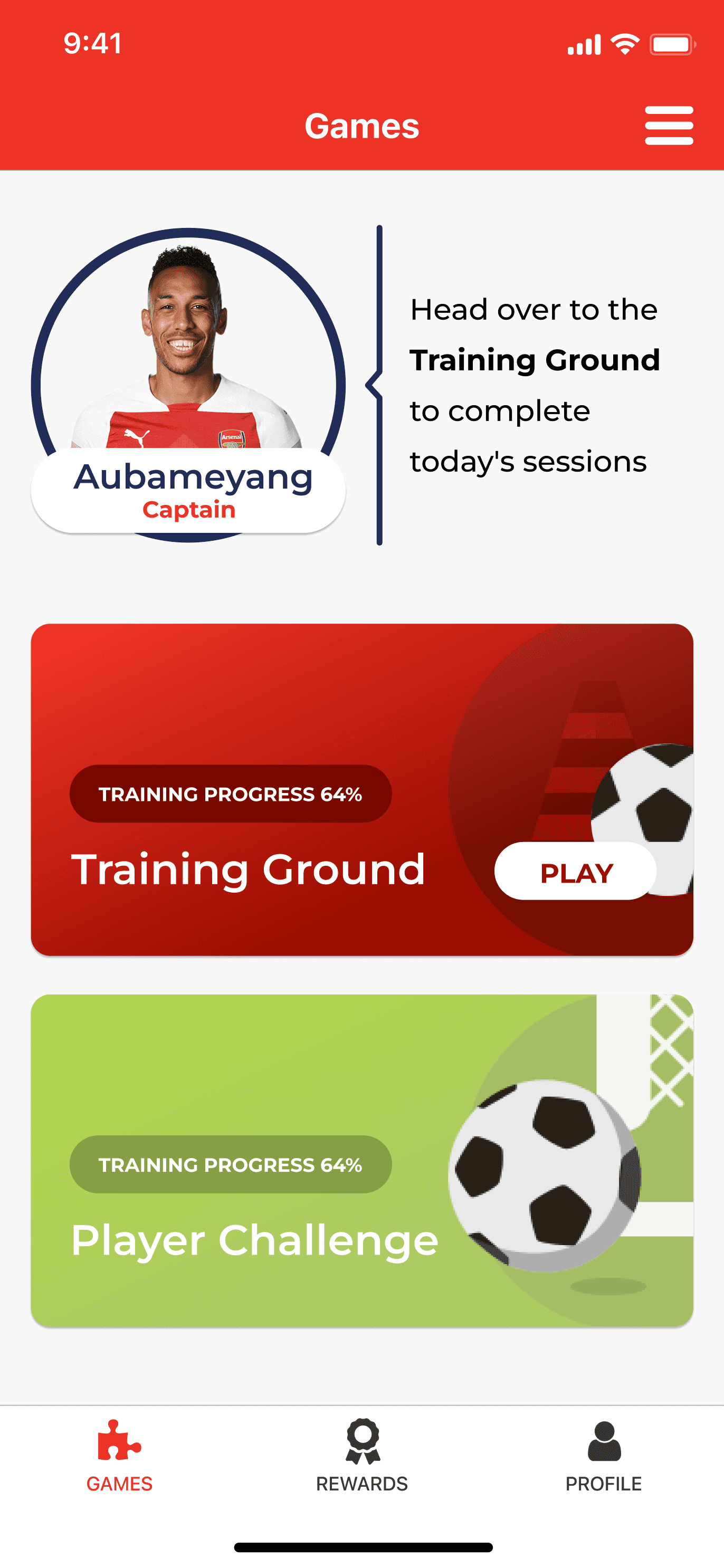
Arsenal Go and Learn and Manchester City Go and Learn were separate apps, each a distinct product on the App Store, fully branded to their club from the moment it opened. Arsenal red, Arsenal badge, Arsenal players. The same for City. A child downloading the Arsenal app would never know the same codebase existed in sky blue.
The white-label architecture was a design system decision, not a user-facing one. Every component was built on a neutral base — colours, badge, and player assets treated as a content layer that could be swapped per club without rebuilding anything. The design work was making sure each version felt genuinely on-brand, not like a generic product with a logo dropped on top.
Onboarding was kept minimal. The client wanted a full how-to introduction, we built it, but designed it to be completable in under a minute and skippable for returning users.
Training | The Learning Games
13 Ways to Learn Without Noticing
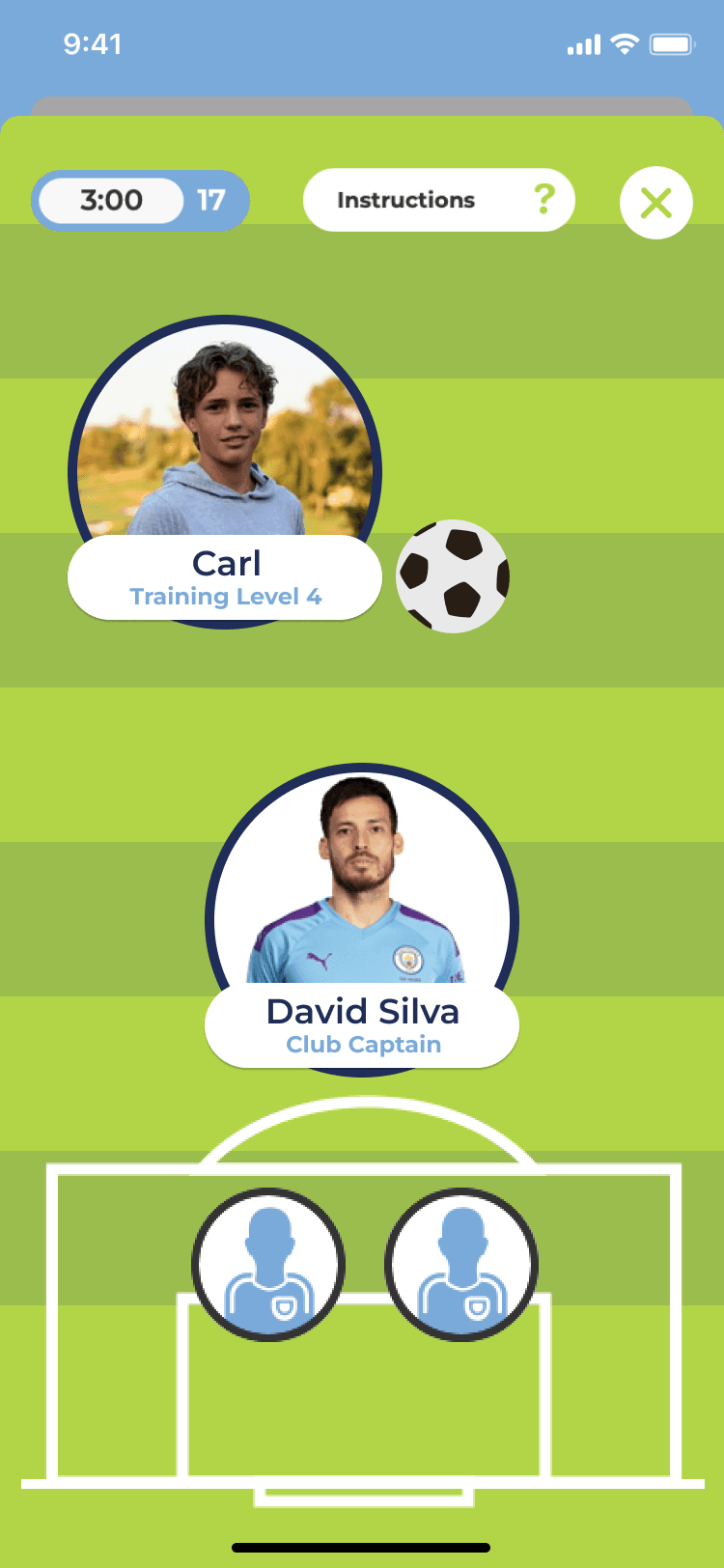
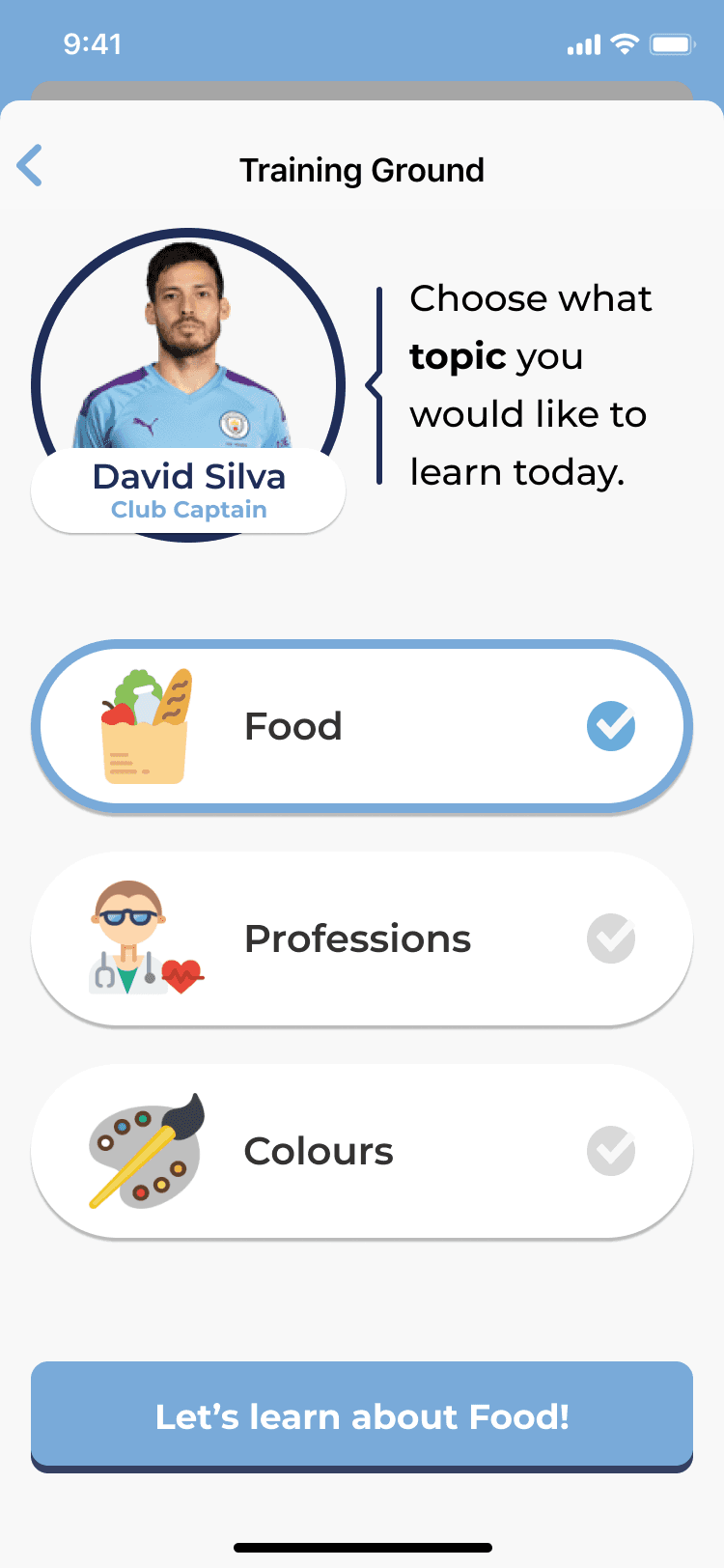
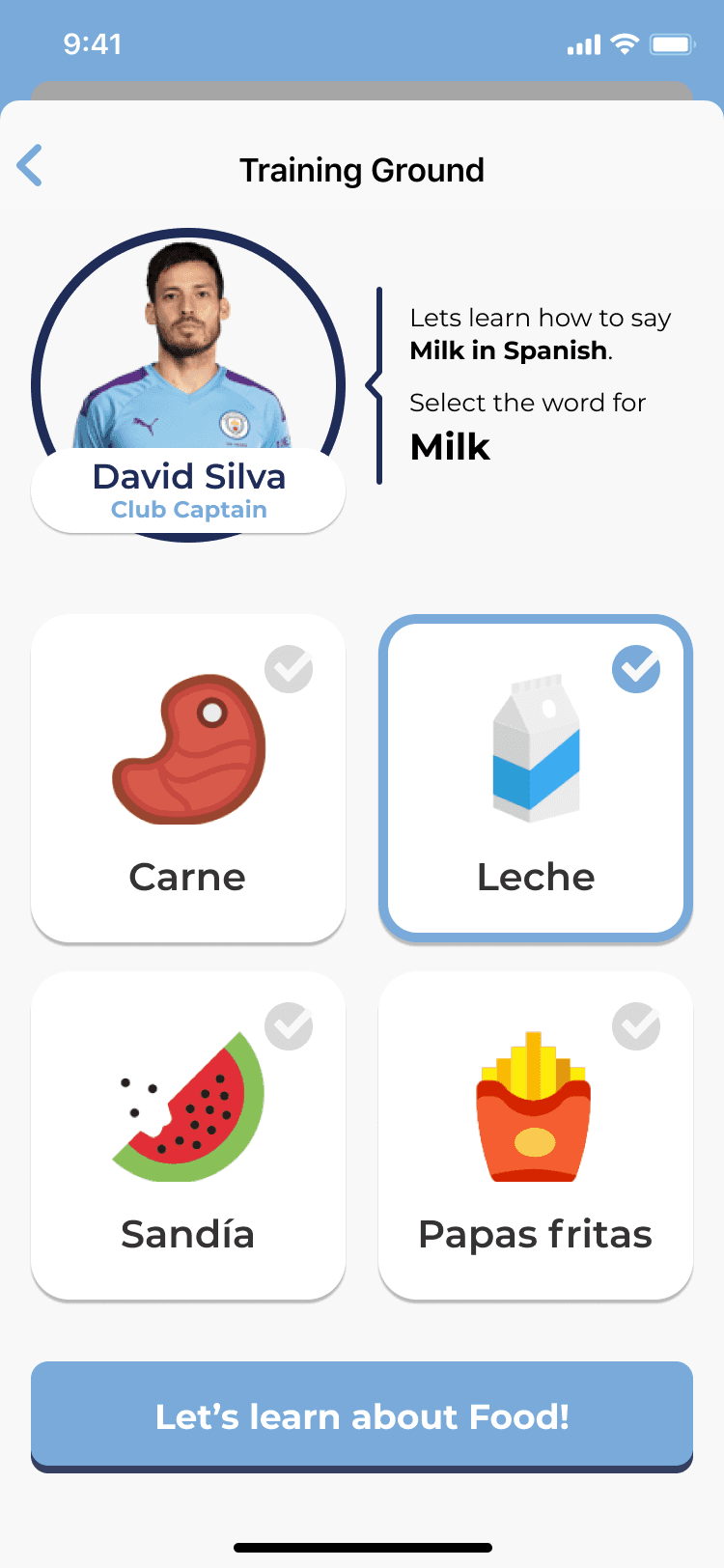
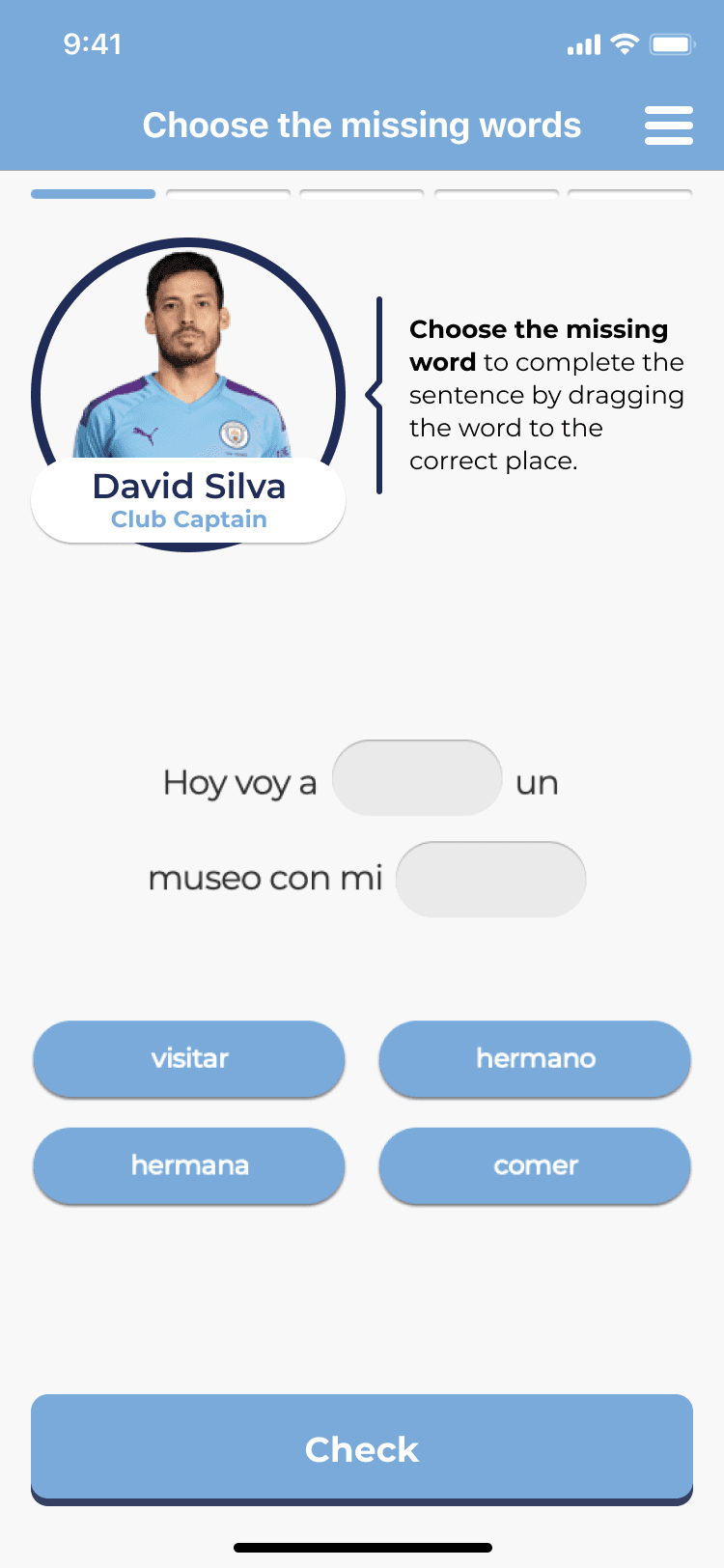
The core learning experience is Training, a set of 13 different game types designed to introduce new vocabulary, grammar, and phrases through interactive exercises.
Each game type presents the same learning goal in a different format: matching words to images, completing sentences, listening and identifying, multiple choice, ordering sequences. Variety keeps the experience from feeling repetitive, getting through one game type leads naturally to the next.
The redesign of the game mechanics focused on one thing: make it possible to progress. The original design required correct answers before moving forward, a mechanic that works well when the content is familiar, but creates a wall when it isn't. We introduced more forgiving progression, faster feedback loops, and earlier rewards so that a child who didn't know a player's name yet could still move forward and come back to that question rather than being stuck on it indefinitely.
After each training game, a score is added to the Player Challenge, giving every small win a visible consequence.
Player Challenges
9 Challenges to Test What You've Learned
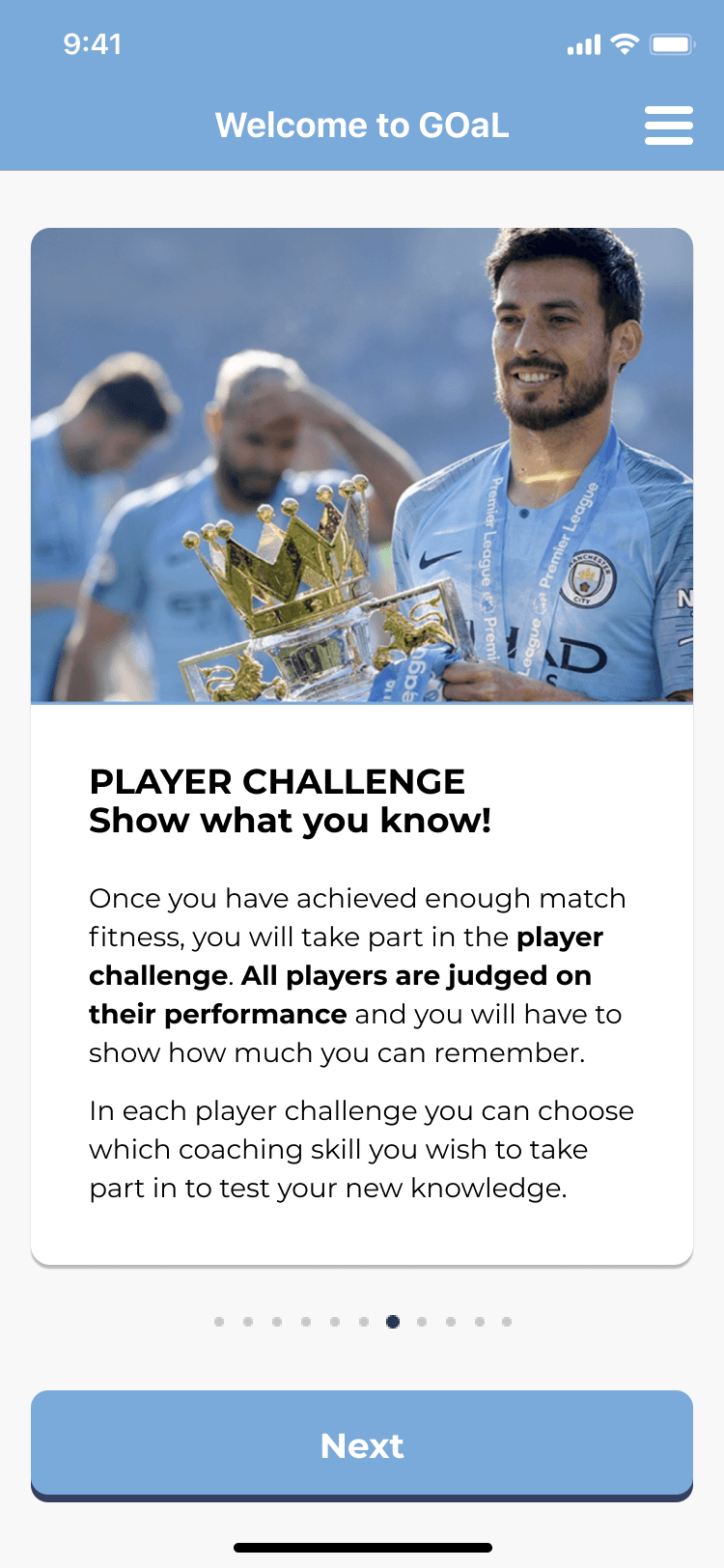
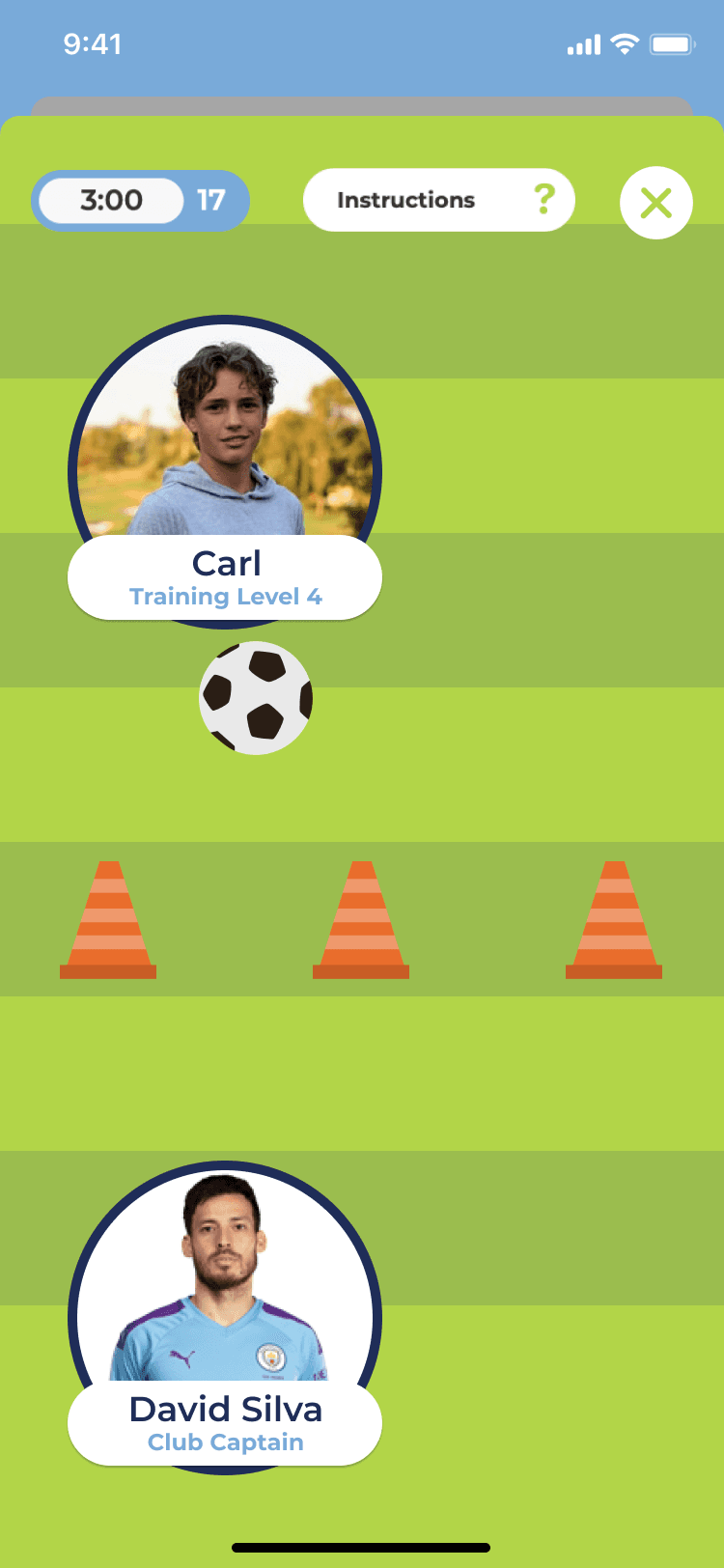
Once training is completed, the score unlocks the Player Challenge section, 9 timed challenges that test the vocabulary and skills built in training.
Challenges introduce time pressure and difficulty levels, adding the competitive element that makes the football metaphor feel earned. Completing a challenge within the time limit, at the right difficulty, is the moment the app feels like a game, not a lesson.
Challenge performance is tracked and feeds into the Player Performance section, giving users a view of their progress over time.
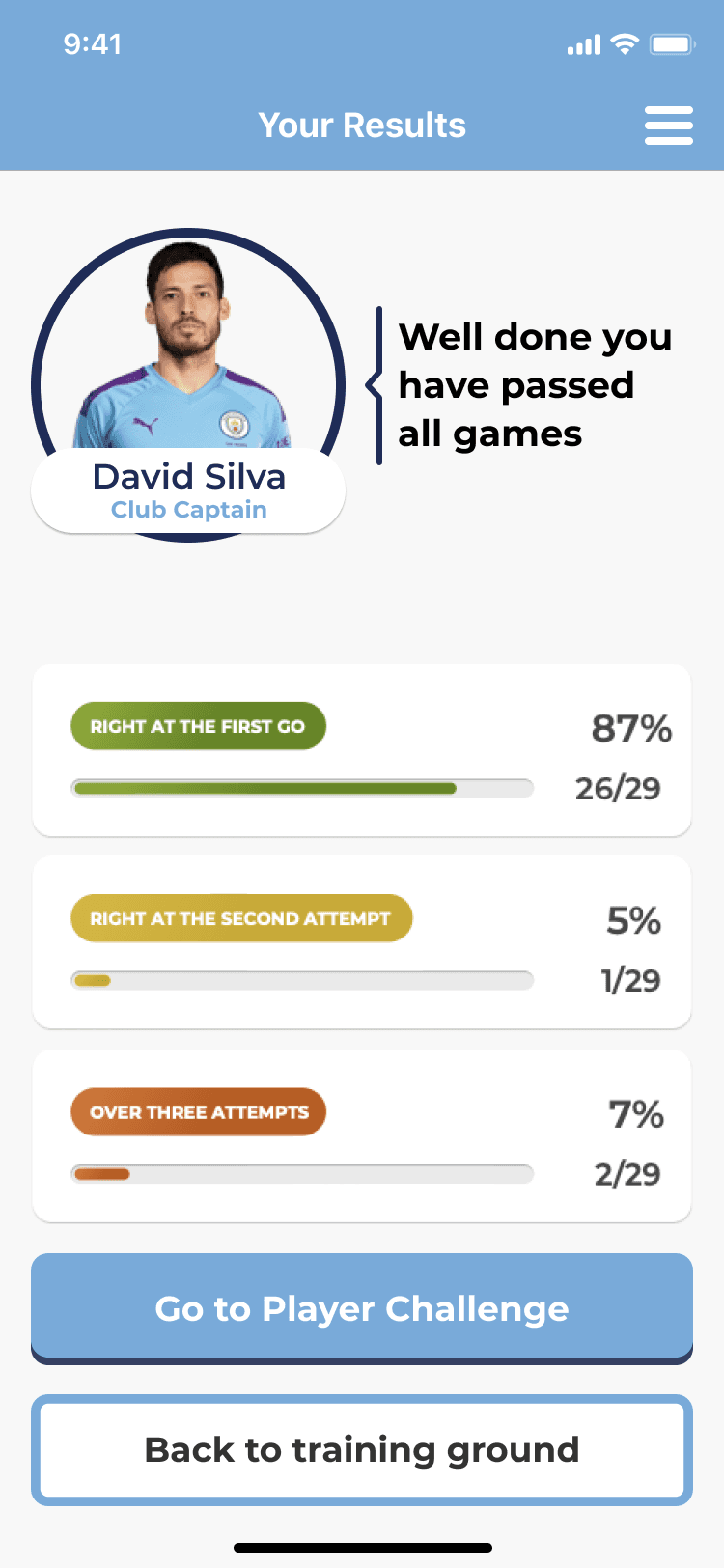
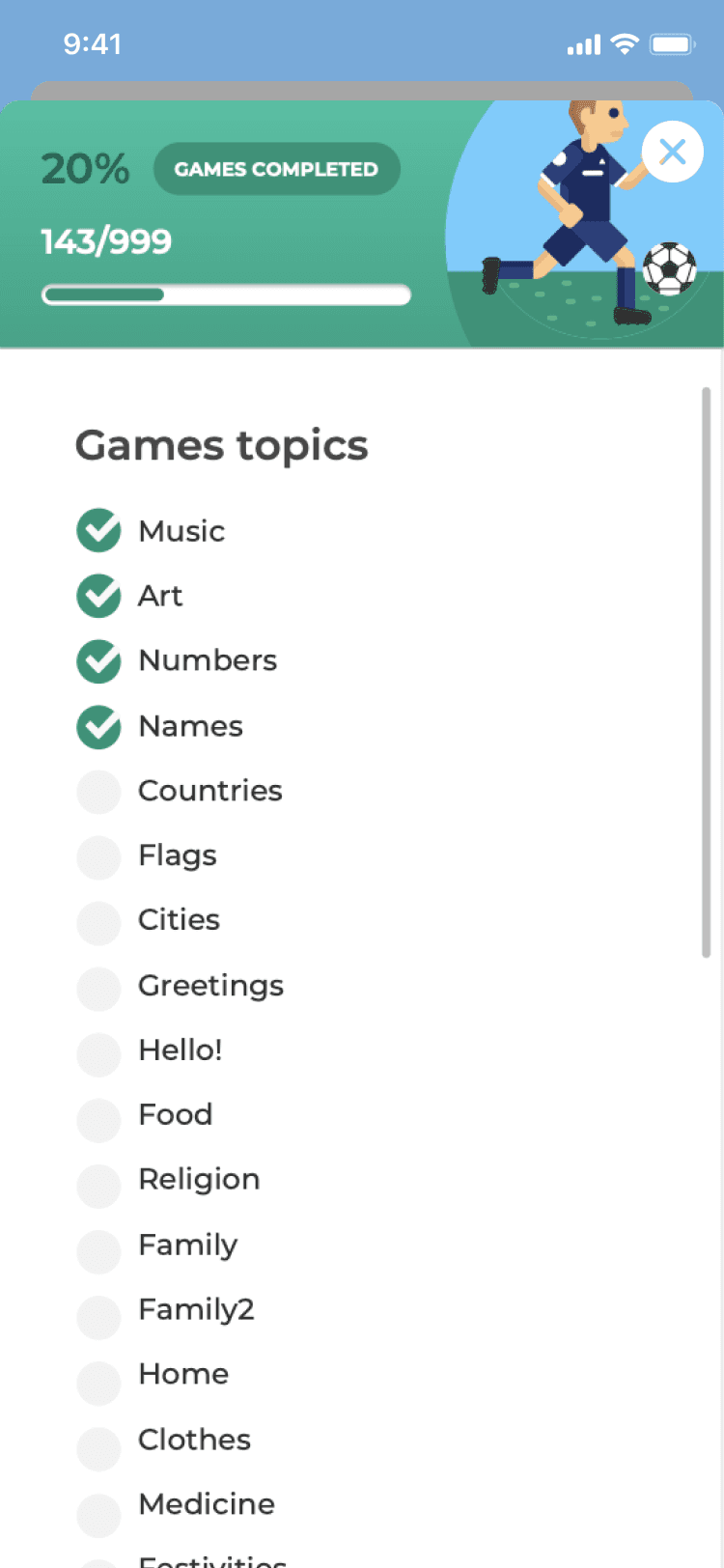
Player Performance and Progress
Stats, Like a Real Player
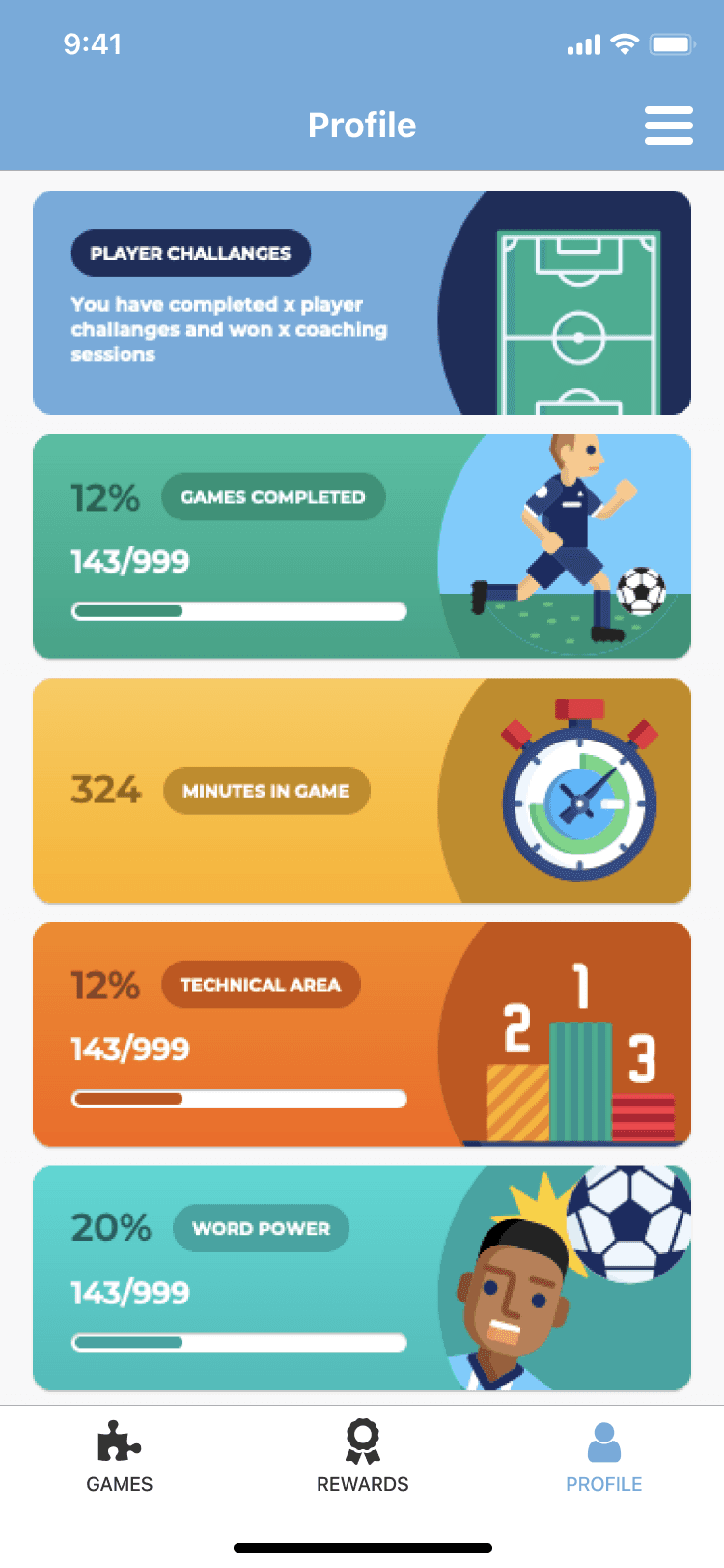
The Player Performance section shows learning statistics in the language of football, not test scores and completion percentages, but performance metrics framed the way a player would think about their own development.
Users can see their progress across topics, their challenge results, and their overall trajectory, presented in a way that feels motivating rather than academic.
The framing matters. A child who thinks they're checking their stats is more engaged than one who thinks they're reviewing their homework.
Badges and Rewards
Something to Earn. Something to Show
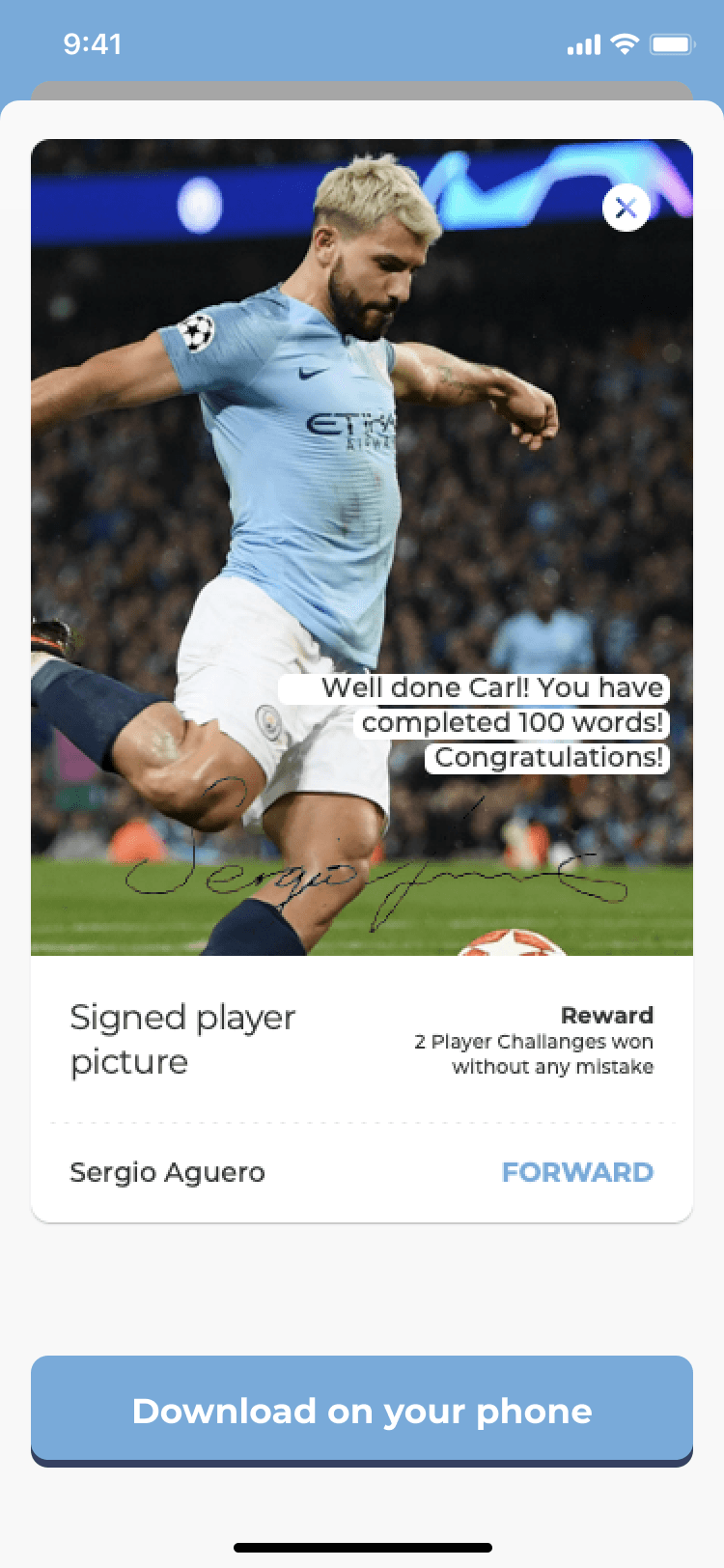
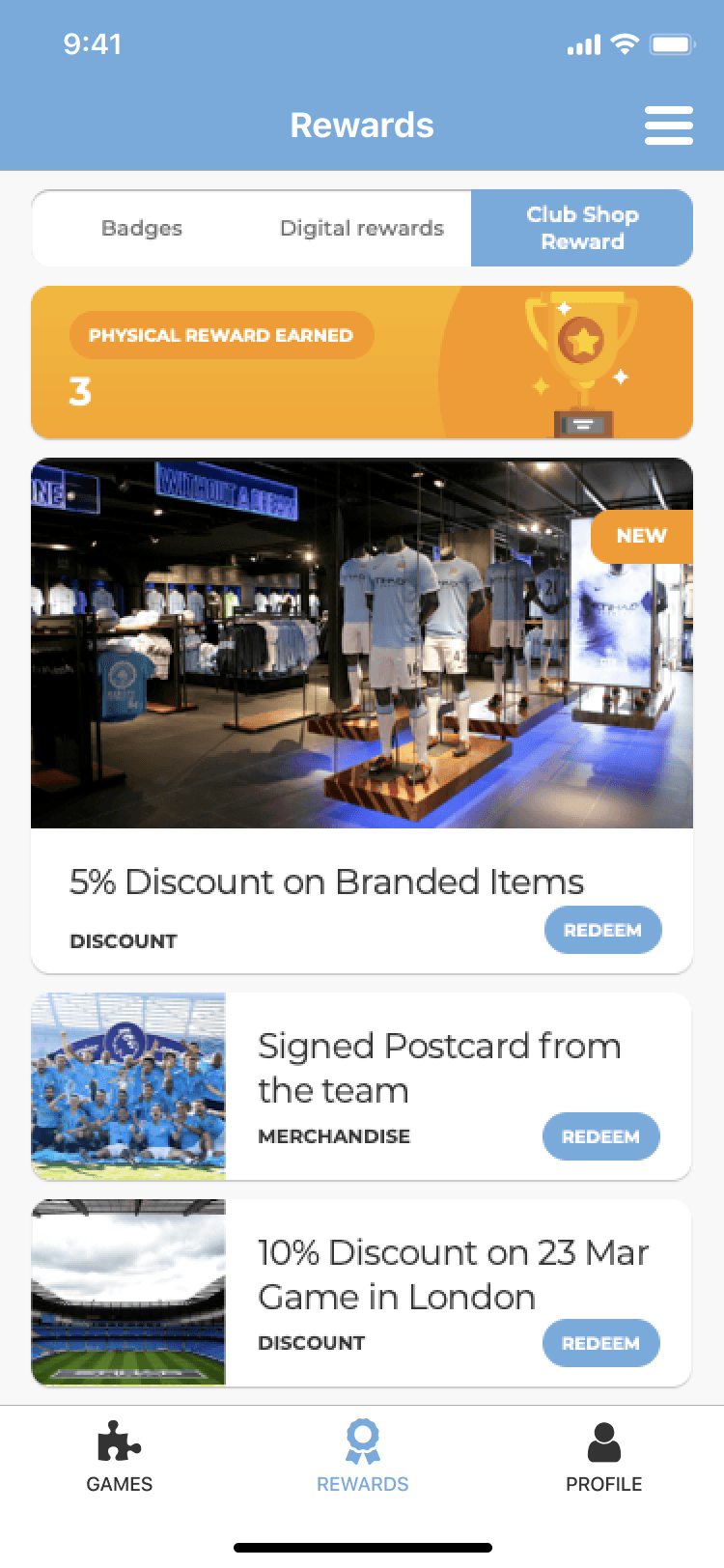
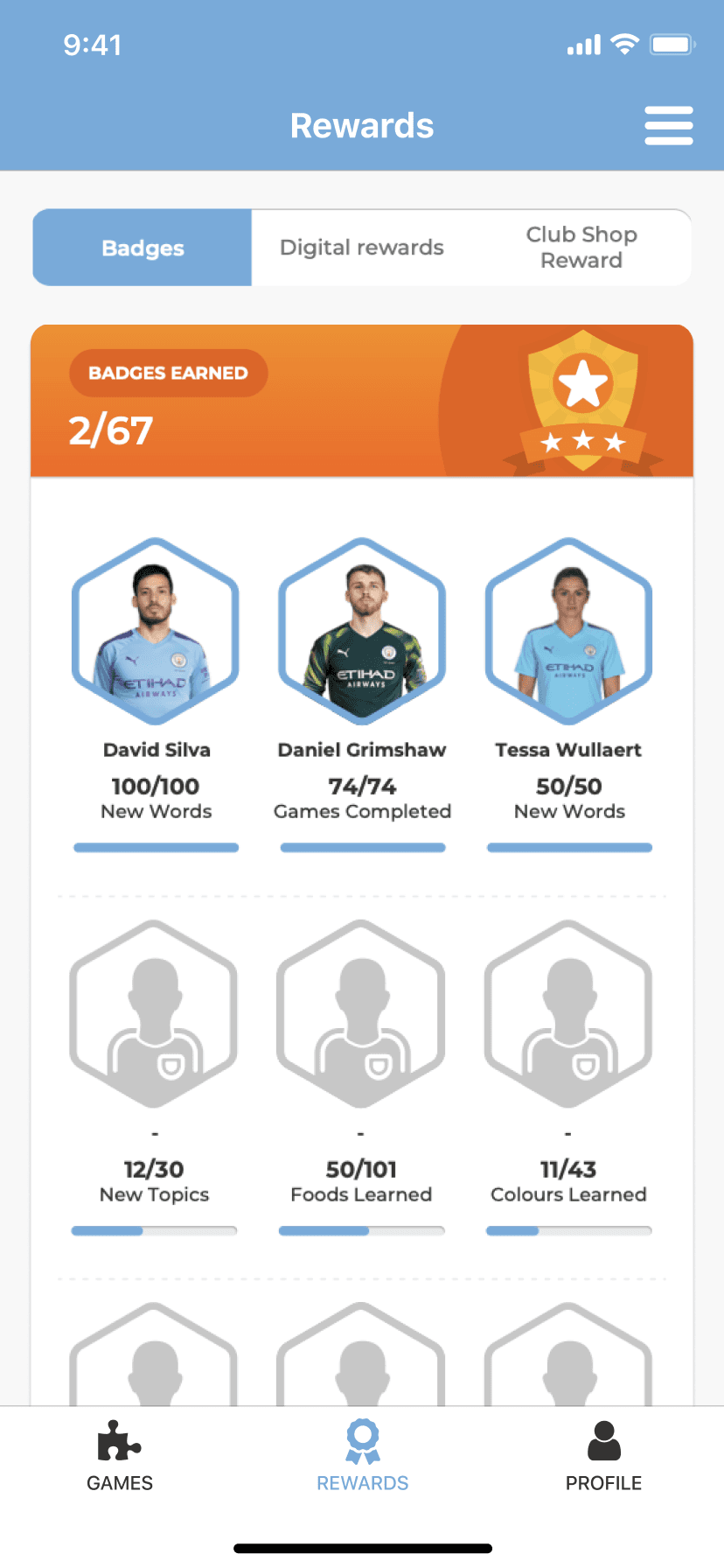
The rewards system gives the learning progression a tangible destination. Completing training sets, finishing challenges, and hitting performance milestones unlocks badges, both digital and physical.
Physical rewards were a deliberate choice. A sticker, a card, something to hold, these land differently for a child than a notification on a screen. They bridge the digital experience back to the physical world in a way that pure in-app rewards can't.
The badge and reward screens were designed to feel like an achievement, a moment, not just a tick in a list.
Brand and White-Label System
One App. Any Club.
The white-label requirement shaped the entire design system. Every component had to work in Arsenal red, Manchester City sky blue, or any other club palette, without needing a redesign each time.
The system used a token-based approach to colour: one set of primary, secondary, and accent values that could be swapped at the theme level. Player imagery was handled as a content layer, separate from the UI.
The result was an app that felt completely on-brand for each club, not a generic product with a logo dropped on top.
solution
The App
GoAL shipped on iOS and Android in official partnership with Arsenal FC and Manchester City, a real product, with real clubs, for real kids.
The design challenge was never the football. It was understanding that a child on a phone is not a child in a classroom, and that the gap between those two contexts requires more than digitising what already works. It requires rethinking the mechanics, the pacing, the feedback, and the reward — until the learning and the playing become the same thing.
OUTCOME
What It Became
GoAL launched on the App Store and Google Play, a white-label platform ready for any football club to adopt, with two of the biggest clubs in the world already on board.
The most valuable part of the project wasn't the partnerships or the App Store listing. It was the user testing with children that reshaped the game design, the moment when real feedback from real users overrode the assumptions built into a methodology that worked brilliantly everywhere else.
That's the lesson that travels: a proven approach in one context is a starting point in another. The design work is figuring out what has to change.
4
club
partnerships
13
training
game type
9
timed player
challenges
5
languages
supported
Get in
touch
Linkedin ↗
Senior & Lead product design roles.
UK or remote.
Reach out if you'd like to know more.
hello@martinasartor.com